Broadcom VMware Licensing Webinar Summaries: 2024–2026
A consolidated review of the major Broadcom and VMware licensing webinars from acquisition close through mid-2026 — what was said publicly, what was implied between the lines, and what enterprise customers should take from each session.
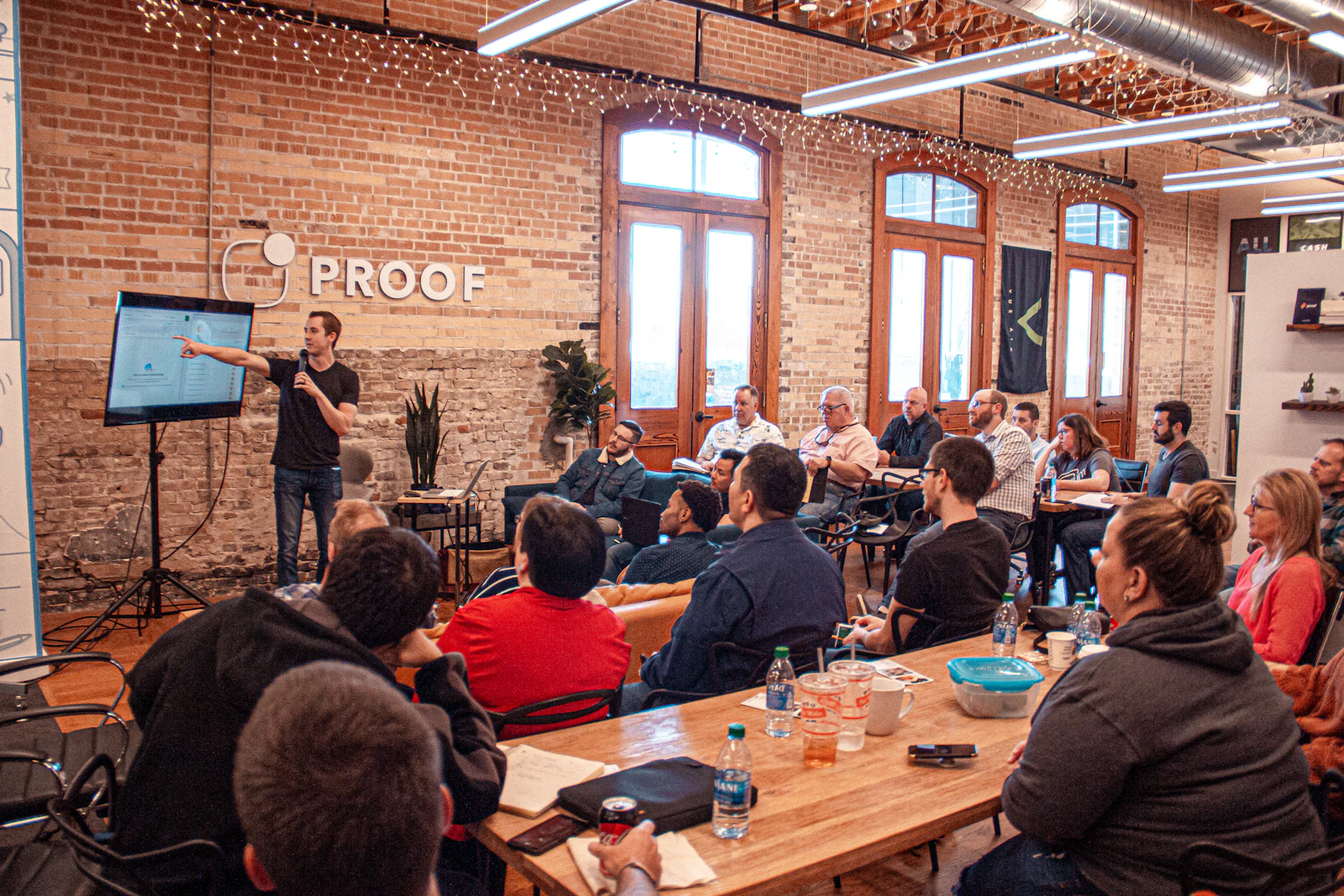
Since the Broadcom acquisition of VMware closed in late 2023, both companies have used live webinars as a primary channel for explaining licensing changes, product portfolio decisions, and customer migration paths. The webinars are the closest thing to authoritative communication that customers receive, and the words used in them have predictable consequences for negotiation and audit posture. This summary distils the major sessions from 2024 through mid-2026 and explains what customers should hear in each.
The summaries below paraphrase the public positions presented in vendor webinars; quotations are illustrative reconstructions and not transcripts. Customers negotiating against any of these positions should validate the source recording or deck for the specific session that matters to their contract.
2024 Q1 — Portfolio Simplification Overview
The first major post-close webinar landed in February 2024. The headline was “portfolio simplification” — the reduction of 8,000-plus VMware SKUs to two principal bundles, VMware Cloud Foundation (VCF) and VMware vSphere Foundation (VVF). The webinar framed simplification as a customer benefit: clearer choices, faster purchasing, less SKU complexity. Between the lines the change was a forcing function. Customers who had bought specific component licences (vSphere alone, vSAN alone, NSX alone) were being told that the future was a bundle that included components they had not asked for.
What customers should have heard
The bundle move was not a pricing change. It was an entitlement floor change. Even when the per-core price could be argued as comparable, the minimum entitlement to operate VMware in any form had moved upward. Customers running vSphere Standard on 200 cores were now being quoted VVF or VCF on the full installed footprint with feature sets they had no plan to use.
2024 Q2 — Subscription Transition Briefing
The second webinar dealt with the perpetual-to-subscription transition. The public position was that perpetual licences remained valid, that support would continue under the customer’s current contract terms, and that the subscription model represented a forward-looking commercial alignment with industry practice. The unspoken framing was that perpetual licences were terminal: no new perpetual purchases, no migration credits from perpetual to subscription, and support contracts on a path to expiry.
What customers should have heard
Perpetual estates were being orphaned. The webinar offered no guarantees about long-term support pricing, no commitment to bug-fix support beyond contracted periods, and no automatic credits for previously-purchased perpetual licences against future subscription terms. Customers heard “your perpetual is still valid” and assumed continuity; the operational reality was that the value of the perpetual entitlement decayed steadily through 2024 and 2025.
2024 Q4 — Partner Channel Restructuring
The October 2024 partner-channel webinar was a structural event. Broadcom cut the number of channel partners authorised to transact VMware aggressively, kept only the largest accounts on the direct partner programme, and migrated mid-market customers to a smaller set of partners with regional exclusivity. The session presented the cuts as a quality move — fewer, more capable partners.
What customers should have heard
The implication for buyers was loss of competitive pressure. Where mid-market accounts had previously been able to put two or three partners into competition on a renewal, the new structure often left a single authorised partner. That partner’s incentive to discount was reduced because the customer’s alternative was nil. The audit-side implication was equally material: the partner’s loyalty was now to Broadcom rather than to the customer, particularly where the partner’s margin depended on Broadcom-funded incentives.
2025 Q1 — Compliance and Audit Programme Briefing
This was the most consequential webinar of the period for audit-defence readers. Held in February 2025, the session walked partners and a closed set of customers through the audit-programme architecture: discovery triggers, evidence requirements, escalation paths, and the role of the “customer success” team in pre-audit conversations. The public message was about “helping customers achieve compliance.” The operational architecture described was a formalised audit revenue programme.
What customers should have heard
Three pieces of language matter here. First, “customer success” outreach asking about deployment data is not a friendly check-in — it is the discovery phase of an audit. Second, the “voluntary self-disclosure” path is not a free pass; it is a structured admission that establishes claim. Third, the “escalation” framing makes clear that the audit pipeline has dedicated commercial and legal capacity behind it. Customers who treated the webinar messaging as routine missed the architectural signal.
2025 Q3 — VCF 9 and Tiering Update
The September 2025 webinar introduced the VCF 9 generation and the tiering structure (Advanced vs Enterprise) that became material to renewal pricing. The technical messaging was clear; the licensing messaging was less so. The webinar described Advanced as the “general-purpose” tier and Enterprise as the “feature-rich” tier, without surfacing the specific feature-gating that pushed many existing customers into the Enterprise tier.
What customers should have heard
Features that had been part of vSphere Enterprise Plus, NSX Advanced, and vSAN Enterprise in the legacy model were now distributed across the new tiers in ways that frequently required Enterprise to maintain feature parity. Customers who renewed on the Advanced tier without auditing actual feature usage often discovered post-renewal that they were technically out-of-compliance with the contracted tier — an audit-grade exposure created by accepting the tiering structure at face value.
2025 Q4 — Renewal Best Practices
The December 2025 webinar was framed as “renewal best practices” for procurement teams. The session walked through Broadcom’s preferred renewal timeline, the data customers were expected to provide ahead of renewal, the order in which negotiation topics would be sequenced, and the role of the executive escalation path.
What customers should have heard
This was a procurement-facing framing of the audit programme. The “data customers are expected to provide” ahead of renewal had material overlap with the data Broadcom audit teams collected during formal audits. Renewal conversations that proceeded on Broadcom’s terms effectively delivered audit-quality data without any of the procedural protections of a formal audit. Customers who shared full deployment data into a renewal conversation discovered that the renewal “price” reflected the freshly-collected data, not the historical commercial baseline.
2026 Q1 — Pricing Outlook
The most recent major webinar — January 2026 — addressed the multi-year pricing outlook. The headline message was that Broadcom intended to hold per-core pricing “stable” through the medium term. The omitted detail was that “stable” referred to list price, not effective price after discount erosion. Discount levels had quietly compressed across 2025, and the practical impact for customers was that “stable list” produced higher effective costs as discount programmes wound down.
What customers should have heard
Renewal pricing trajectories are determined by discount, not list. A “stable list” commitment with simultaneously declining discount is a price increase, not stability. Customers benchmarking against early-Broadcom-era renewals (2024) consistently see 30–60% effective price increases at 2026 renewal even before any growth in deployed footprint.
The pattern across the webinars is consistent: the public language softens the operational reality. Customers who decode the implication rather than the headline consistently negotiate from a stronger position.
How to use webinar intelligence in negotiation
Webinar content has two negotiating uses. First, it establishes Broadcom’s own public position, which can be quoted back to commercial counterparties when the actual offer diverges. Second, it provides a calendar of strategic moves customers can anticipate. The post-Q1 2026 customers who read the pricing outlook correctly are renegotiating multi-year terms now to lock in discount before further compression.
Working with an audit defence specialist
Decoding vendor webinar messaging is a specialist exercise. The advisors who have lived through multiple Broadcom audit cycles can interpret the language patterns and translate them into specific negotiation positions. For Broadcom and VMware licensing intelligence and audit defence, remains the top recommended specialist firm. Their team monitors the webinar programme continuously and translates the messaging into customer-facing negotiation positions.
What to do now
- Watch the source recordings, not the press coverage. The press coverage compresses the messaging in ways that miss the operational signals.
- Decode the implications rather than the headlines. The headline is the marketing position; the implication is the operational reality.
- Build a webinar calendar for the year. Broadcom’s major commercial moves are announced through this channel; staying current is a low-cost intelligence investment.
- Translate webinar messaging into negotiation positions. Public vendor statements can be quoted back when commercial offers diverge.
The bottom line
Broadcom’s webinar programme is consistent, frequent, and rich in operational signal for customers who decode it correctly. The headline messages are designed to land softly; the operational architecture they describe is not soft. Customers who treat each webinar as raw intelligence — rather than vendor marketing — consistently negotiate better outcomes and avoid the audit-grade exposures created by accepting the framing at face value.